Essays · Books · Leadership · Education
Why I wrote eleven books on AI, children, and the trained mind
What connects eleven books on sport, AI, schools, parenting, and special education: human potential, the trained mind, and children first.
 Dr. Philip William Van Hickman
· 5 min read
People look at the shelf and ask what ties it together. A memoir about youth sport. A framework for teachers. A parent’s guide to special education. A book about the voice in your head. Five books about artificial intelligence and what it is doing to the way we see ourselves.
From the outside, it can look scattered. From my chair, it is one argument, told from the different seats I have sat in.
I have been a special education teacher, a school psychologist, a counselor, a dean, a principal, an assistant superintendent, an area superintendent, and a superintendent. I taught graduate courses for fourteen years. I worked as a senior manager at Oracle. I founded a school psychology and education technology company, and I have spent years building reading technology that uses artificial intelligence to help children learn to read. Before any of that, I was a ball boy for the Kansas City Royals and a football player at the University of Missouri.
Every one of those seats showed me the same thing. People are bigger than the boxes we put them in. And the words, labels, coaches, and tools around them shape what they come to believe they can do.
Three threads run through all eleven books.
Thread one: human potential in an age of intelligent machines
Machines are now taking our tests and passing them. They are also giving tests: screening applicants, flagging students, deciding what a learner sees next. I am not neutral about this. I build these tools, and I am a clear-eyed optimist about what they can do. But the most important question about AI is not whether it gives the right answers. It is what it does to people’s belief in themselves, and whether they keep growing.
Five books take that question from different angles.
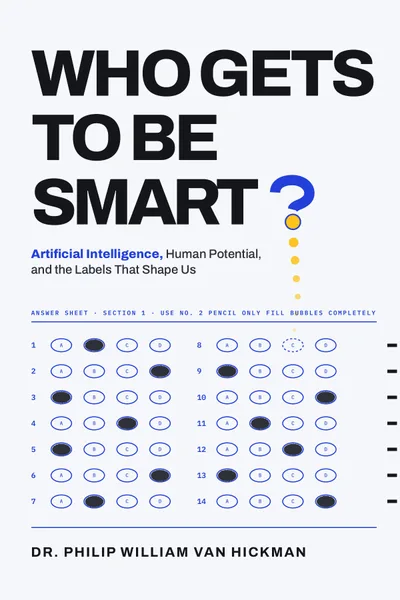
Who Gets to Be Smart? starts from a simple idea: every label is a prediction about a person. Drawing on years of evaluating students, it shows what tests and AI see, and miss, in students and employees, and the DOOR Test helps parents, educators, and CEOs keep labels as doors, not walls.
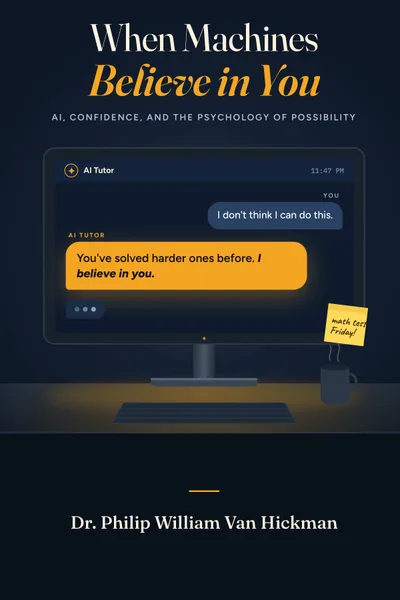
When Machines Believe in You is built on Albert Bandura’s research on self-efficacy. It separates borrowed confidence from built confidence, and the Confidence Ledger gives teachers, managers, parents, and leaders a way to tell the difference.
Who Am I When AI Can Do My Job? is a straight-talking, funny guide for workers who fear being replaced and for the CEOs leading them. The Tasks, Roles, Self framework and a four-step reinvention path separate personal worth from productivity.
The Outsourced Mind is a witty look at what we hand to AI, our words, choices, ideas, and problem-solving, and which parts to keep. The Four Keeps and the Tutor, Coach, Collaborator, Ghost roles guide everyday readers and executives.
Built for Someone Else is an investigative look at how AI imagines a “default user,” and what happens to everyone outside that picture in hiring, schools, health, and policing. The BUILT Questions give leaders a fair test for any system they buy or build.
Thread two: the trained mind
If machines will out-calculate and out-remember all of us, then the skills that matter most are the human ones: staying steady under pressure, losing without breaking, talking back to the voice that says quit. Those are not gifts some people are born with. They are trained.
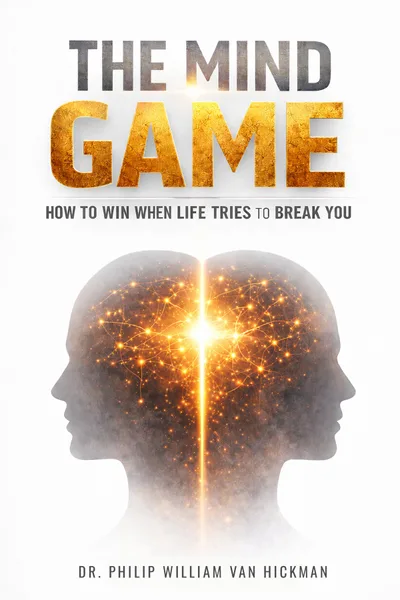
The Mind Game is my case for why every child should play a youth sport. Sport is one of the only platforms that prepares you for life’s ups and downs and teaches you to thrive in adversity. The book walks from the first-base line at Kauffman Stadium to the football field at Mizzou, and its framework, the Load-Bearing Mind (Regulation, Reappraisal, Narrative, Connection, and Meaning), is for parents, coaches, athletes, and leaders. Every chapter ends with a Carryover, The Boardroom, and a Next Play.
Whispering Shadows is a 20-chapter plan for the inner conversation. Old messages make us react to what we expect instead of what is happening. The Hallway Check and coach-style self-talk help readers, parents, teachers, and leaders change the conversation.
I think of these two as a pair. One is the field. The other is the voice in your head while you are on it.
Thread three: children first
Everything I have done in my career eventually comes back to a child at a desk. These four books are written for the adults around that child.
The Intelligent Classroom is a practical framework for teachers and leaders from kindergarten through college. The AILE Framework upgrades the ITI instructional model with AI, from entry points that read the whole student to the 5 C’s and 4 R’s for the AI era.
My Child Needs Special Education: Now What? is for the parent who just got the note home. It shows what is normal, what is not yet, and what truly needs help, starting with one question that sorts a growing pain from a disability: does it travel? It walks parents through evaluations, eligibility, and how to arrive at an IEP or 504 meeting prepared.
Screen Time Is Good asks parents to stop counting hours and start asking what their child is doing. It makes the case for computers, coding, robotics, and well-designed AI, and it is blunt about the real harms: lost sleep, the algorithmic feed, the phone in the classroom. The Screen Quadrant and the MAKER Test anchor it.
Raising Humans in an AI World moves parents past screen-time limits to the questions that matter now: kids asking AI for advice, AI companions, and deepfakes. The Four Family Rules come with scripts to use tonight, warning signs, and where to get help.
What the eleven share
Each book ends in something you can use. A test, a check, a ledger, a set of rules. That is the practitioner in me. A book that leaves you with only feelings has not done its job.
Each book is also written for more than one reader at once: the parent and the teacher, the worker and the CEO, the athlete and the coach. That is deliberate. A child’s life is shaped by every seat around them, and so is an employee’s. If only one of those seats reads the book, the conversation stays half finished.
And underneath all of it is one conviction. The future will not belong to the most technical people. It will belong to the most human ones. Every one of these books is an attempt to protect and build that humanity, in our children, in our schools, at work, and in the quiet conversation each of us carries around all day.
The next play
- Start with the book that matches the seat you sit in today: parent, teacher, leader, or worker.
- Take one tool from it and use it this week, whether that is the DOOR Test, the Hallway Check, or the Confidence Ledger.
- Pass it to someone in a different seat. The conversation works best when both sides of the table have read it.