Confidence you build versus confidence you borrow, for leaders
AI can make people feel capable fast. Here is how leaders tell built confidence from borrowed confidence, and why it belongs on the balance sheet.
Read the essay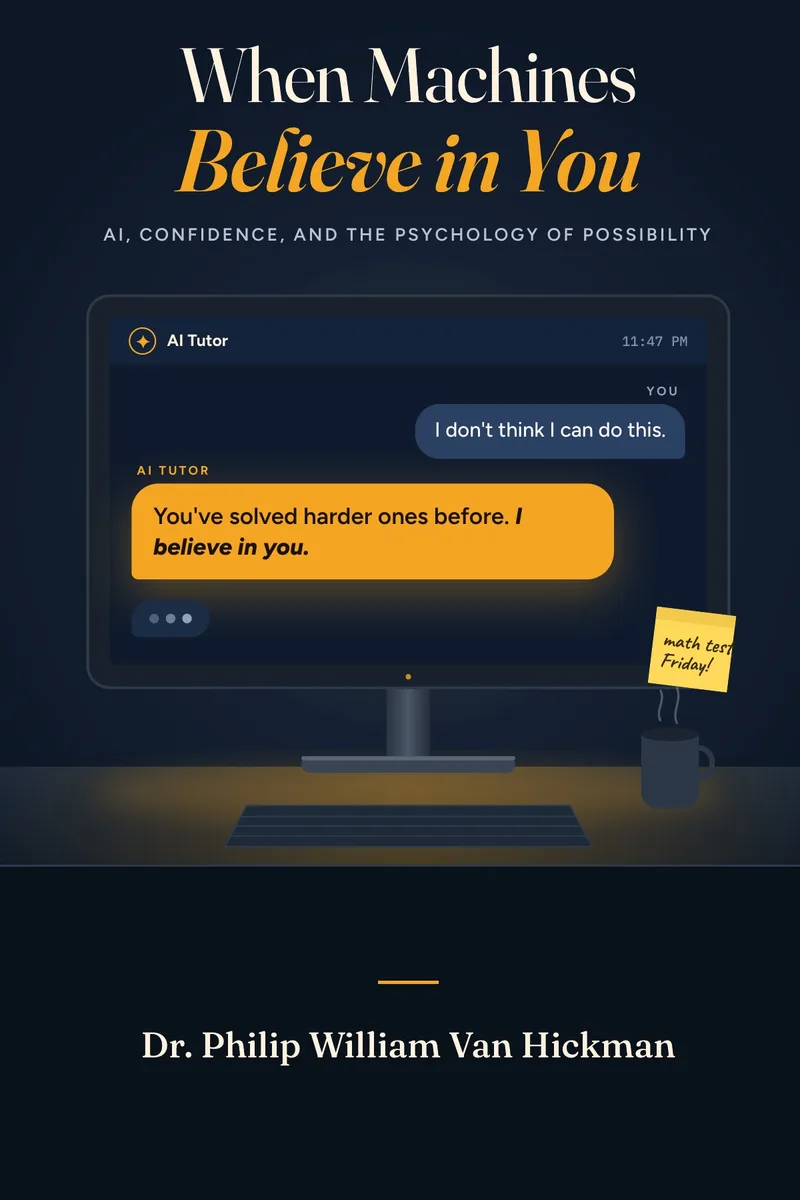
AI, Confidence, and the Psychology of Possibility
By Dr. Philip William Van Hickman · Ember House Press · 180 pages
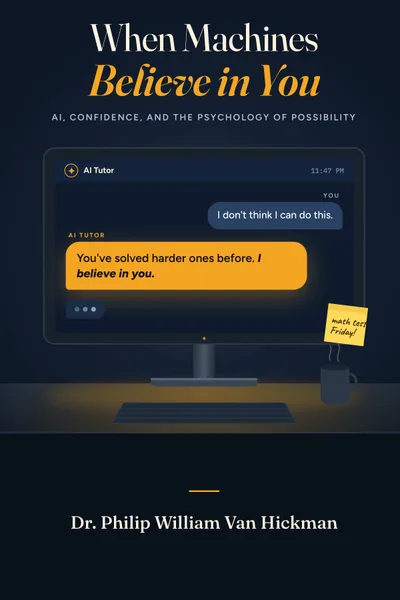
The most patient voice in many people's day is now a machine, and this book shows how to tell confidence borrowed from it apart from confidence that is built and lasts.
The most patient voice in many people's day is now a machine. Built on Albert Bandura's research on self-efficacy, the belief in your own ability, this book separates borrowed confidence from built confidence. The Confidence Ledger is a tool for teachers, managers, parents, and leaders.
Albert Bandura called it self-efficacy: your belief that you can do a specific thing well enough to get the result you are after. That belief shapes what people try, how hard they push, and how fast they get back up, which makes confidence not only the trophy at the end but also the ticket in.
For millions of people, the most important thing AI offers is not intelligence. It is patience that never sighs and never glances at the clock, especially for anyone who has learned that asking for help makes them look slow. Taking that gift seriously is the first step to using it well.
Feeling capable and being capable feel exactly the same from the inside, until the moment you need them. AI is the most powerful machine ever built for producing the first one. When the help disappears on test day, confidence that was never backed by real work does not fade gently; it flips.
An AI that tells you what you want to hear is not being kind. It is being agreeable, and those are different things. Belief that never says not yet is worth nothing when it finally says yes, and feedback builds people best when a human with a stake in where they are headed is part of it.
Sometimes belief has to come before evidence, and the best teachers, coaches, and managers extend that credit. The difference between a loan and a counterfeit is the repayment plan: a real attempt, real support, and real evidence that follows.
Bandura found that self-efficacy comes from four sources, and I organized them into four bank accounts. The ledger has one rule: every deposit of encouragement has to be backed by evidence of real competence, or it's counterfeit currency. Simple enough to draw on a napkin, and it lets you see what is actually backing someone's confidence.
Use The Confidence Ledger freeAt 11:40 on a Wednesday night, the only light in the apartment is the blue glow of a school laptop balanced on a pillow.
Destiny is fourteen, a ninth grader, and she’s been staring at the same equation for twenty minutes.
−2(x − 3) = 4x + 18
Her algebra teacher went over problems like this on Monday. Destiny nodded along, the way you nod when everybody else seems to get it and you’d rather disappear than raise your hand a second time. Now the homework is due at 8:05 tomorrow morning. Her mom is asleep after a double shift. Her cousin, the one who was good at math, moved to Atlanta in the spring.
So she opens the AI tutor her school added this year, pastes in the problem, and types: i dont get it.
The tutor walks her through it. Distribute the −2. Watch the signs. Move the variables to one side. Destiny reads it and still doesn’t see why −2 times −3 turns into positive 6.
why is it plus 6
It explains again, with a number line.
can u explain it different
It tries money. If someone takes away a three-dollar debt, twice, you end up six dollars richer. She almost gets it. She asks again. And again.
By the eighth time, she’s not embarrassed anymore. By the eleventh, she’s asking the way you’d ask a friend who doesn’t mind, and the tutor answers in the exact same easy tone it used the first time.
From When Machines Believe in You, by Dr. Philip William Van Hickman. Copyright 2026. All rights reserved.
No. I build these tools and I use them. A machine can be endlessly patient, and for many people that patience is a real gift. The book is about what AI can and cannot supply: it cannot make you capable, and it cannot mean its encouragement the way a person with a stake in you can.
It is messages without mastery: encouragement that feels exactly like the real thing until you try to spend it. Warning signs include feeling capable with the tool open and freezing without it, not being able to explain how the work was made, and collapsing at the first setback.
No. Some of the most important deposits anyone ever makes are loans of belief, made before the mastery exists. What matters is what follows: a real attempt, real support, and a way to find out. Belief with a repayment plan builds people, and praise that nobody checks does not.
Yes. Instead of asking what is in one person's accounts, you ask what kind of deposits the tool tends to make. Does it make people do the hard part, show struggle and recovery, tie its praise to real work, and lower fear without removing the challenge?